
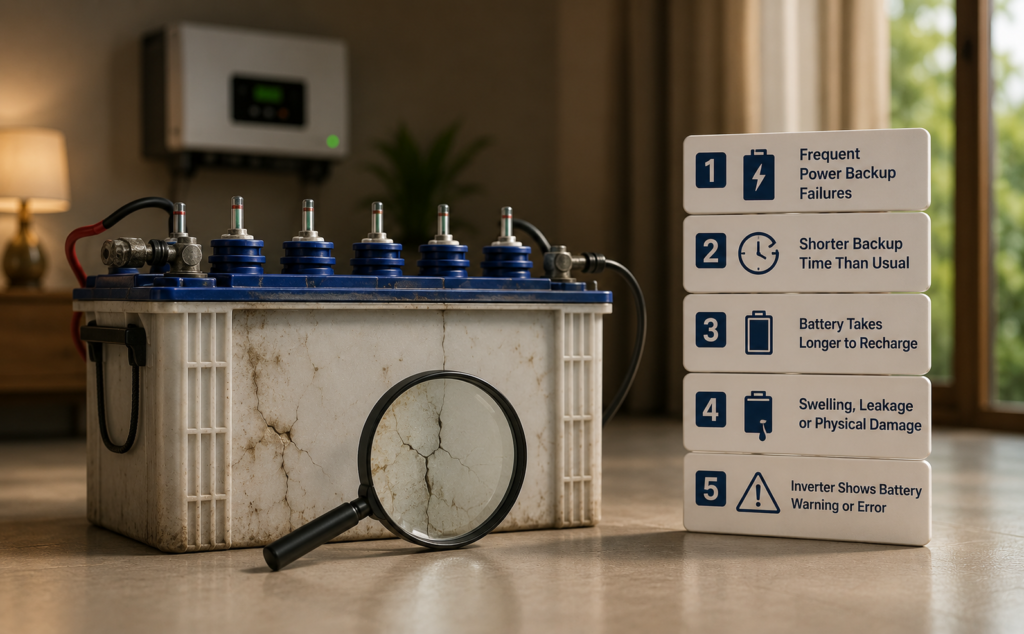
An inverter battery is the backbone of your backup power system, ensuring your home or business stays powered during outages. However, like any battery, it has a limited lifespan. Ignoring the warning signs of a failing battery can lead to unexpected power failures and reduced performance. Here are five common signs that indicate it may be time to replace your inverter battery.
One of the first signs of a weakening inverter battery is a noticeable drop in backup time. If your battery previously powered your appliances for several hours but now lasts only a short period, it may no longer be able to hold a full charge.
What to do:
If the backup duration continues to decrease even after proper charging and maintenance, consider replacing the battery.
A healthy inverter battery should charge within the expected time specified by the manufacturer. If your battery takes significantly longer to recharge or never reaches a full charge, it could indicate that the battery’s internal cells have deteriorated.
What to do:
Have the battery inspected by a technician. If the issue persists, replacing the battery is often the best solution.
If your inverter switches off unexpectedly during a power outage or struggles to support connected appliances, the battery may not be delivering sufficient power. This is a strong indication that the battery’s performance has declined.
What to do:
Check for loose connections and ensure the inverter is functioning correctly. If everything else is in good condition, the battery may need replacement.
Visible signs such as cracks, swelling, corrosion around the terminals, or leaking electrolyte should never be ignored. A damaged battery is not only inefficient but can also pose a safety risk.
What to do:
Disconnect the battery safely and replace it immediately. Avoid using a damaged battery, as it may fail unexpectedly or become hazardous.
Most inverter batteries have an average lifespan of 3 to 7 years, depending on the battery type, usage patterns, maintenance, and operating conditions. If your battery is approaching or has exceeded its expected lifespan, replacing it proactively can help prevent sudden failures.
What to do:
Check the installation date or purchase records. If the battery is nearing the end of its service life, plan for a replacement before performance declines further.
Replacing a worn-out inverter battery at the right time helps ensure:
A failing inverter battery often gives clear warning signs before it stops working completely. Reduced backup time, slow charging, frequent power interruptions, physical damage, and an aging battery are all indicators that it’s time for a replacement. Regular maintenance and timely replacement will keep your power backup system dependable and efficient, giving you peace of mind whenever the electricity goes out.